
WAT WAT
The Challenge
The Flemish government launched WAT WAT, a new youth information platform replacing De Jongerengids, aimed at guiding young people from their first kiss to their first job.
The challenge was to introduce WAT WAT to youngsters aged 11 to 24 in a way that was visual, innovative, and relatable. The campaign needed to speak the language of young people, engage them meaningfully, and make the platform feel relevant from the very first interaction.

Our Approach
Trendwolves designed a phygital, youth-centered campaign combining online and offline channels.
Key elements of our approach included:
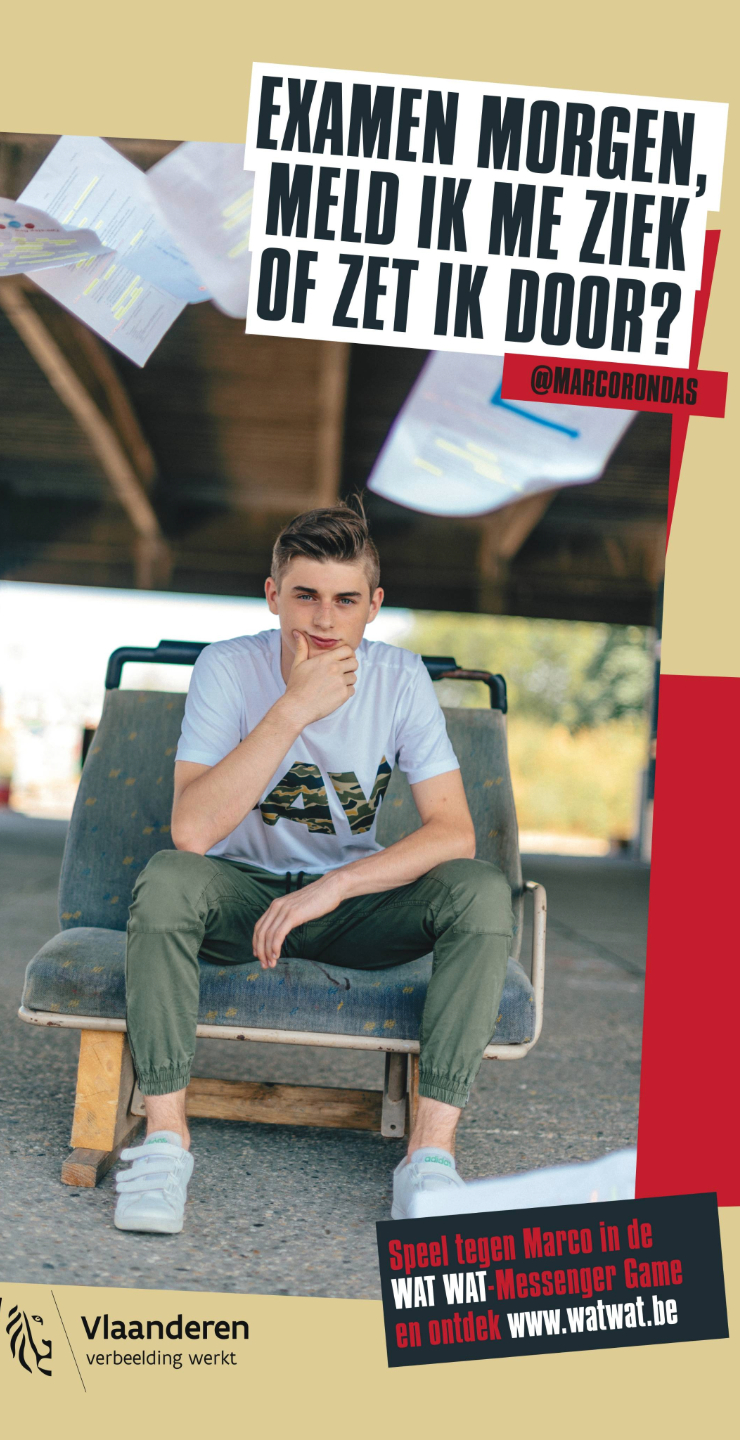
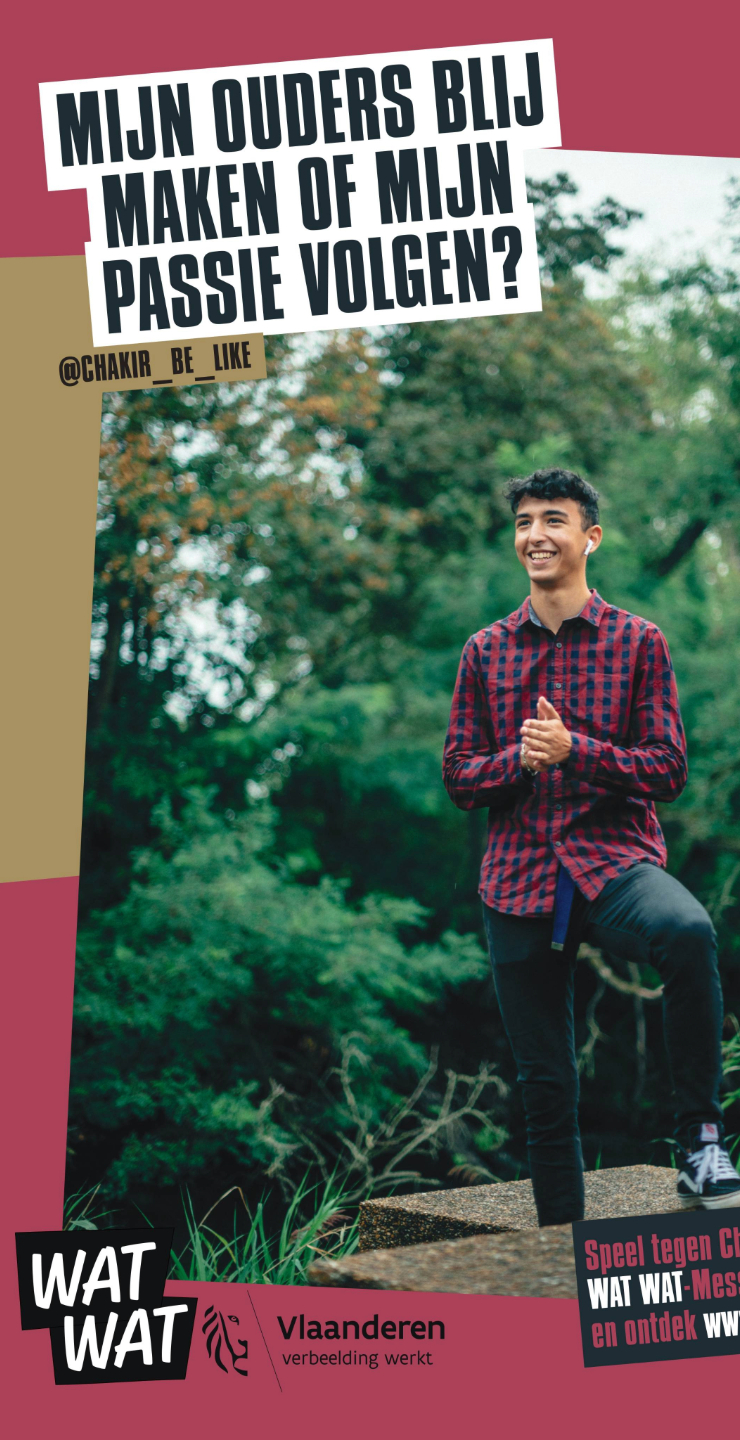
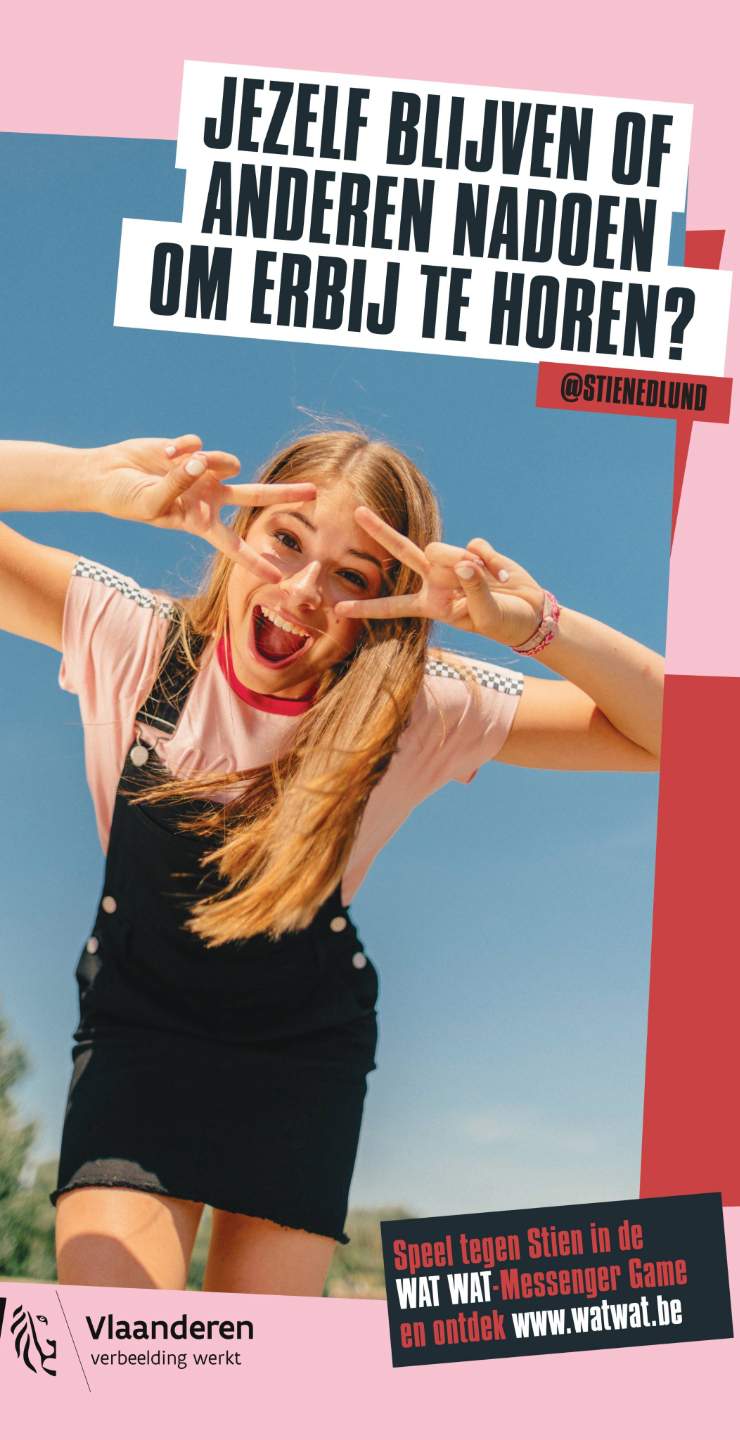
- Co-creation with influencers: Engaged 8 influencers to share personal dilemmas reflecting real-life struggles of young people
- Multichannel storytelling: Posters across Flanders, content on influencers’ personal channels, and an interactive game on Facebook Messenger
- Peer-to-peer engagement: Dilemmas encouraged young people to interact, guess answers, and learn from each other in safe, familiar networks
The campaign was built around one constant theme: dilemmas (relatable challenges that young people face daily).

Activation
Trendwolves executed the campaign in three integrated layers:
- Outdoor visibility – Each influencer had their own poster displayed across Flanders, capturing attention in physical spaces
- Digital engagement – Influencers shared dilemmas on social media to spark conversation and interaction
- Interactive Messenger game – Youngsters could guess friends’ and influencers’ answers to dilemmas, aiming to “defeat the dilemma llama” while learning from peer perspectives
Influencers were involved throughout the process to ensure authentic, peer-driven communication, making the platform more relatable and engaging for its audience.

Our impact
The campaign successfully introduced WAT WAT to a wide youth audience in an interactive and engaging way.
By combining offline visibility, digital content, and gamification, Trendwolves helped make WAT WAT accessible, fun, and relevant, while fostering peer-to-peer dialogue around everyday dilemmas. The approach strengthened awareness, platform adoption, and engagement, showing that meaningful youth communication works best when co-created with young people themselves.
Every project is different, but they all start with the same belief: youth culture is the key to relevance.