Tecktonik and the universal feeling of being young
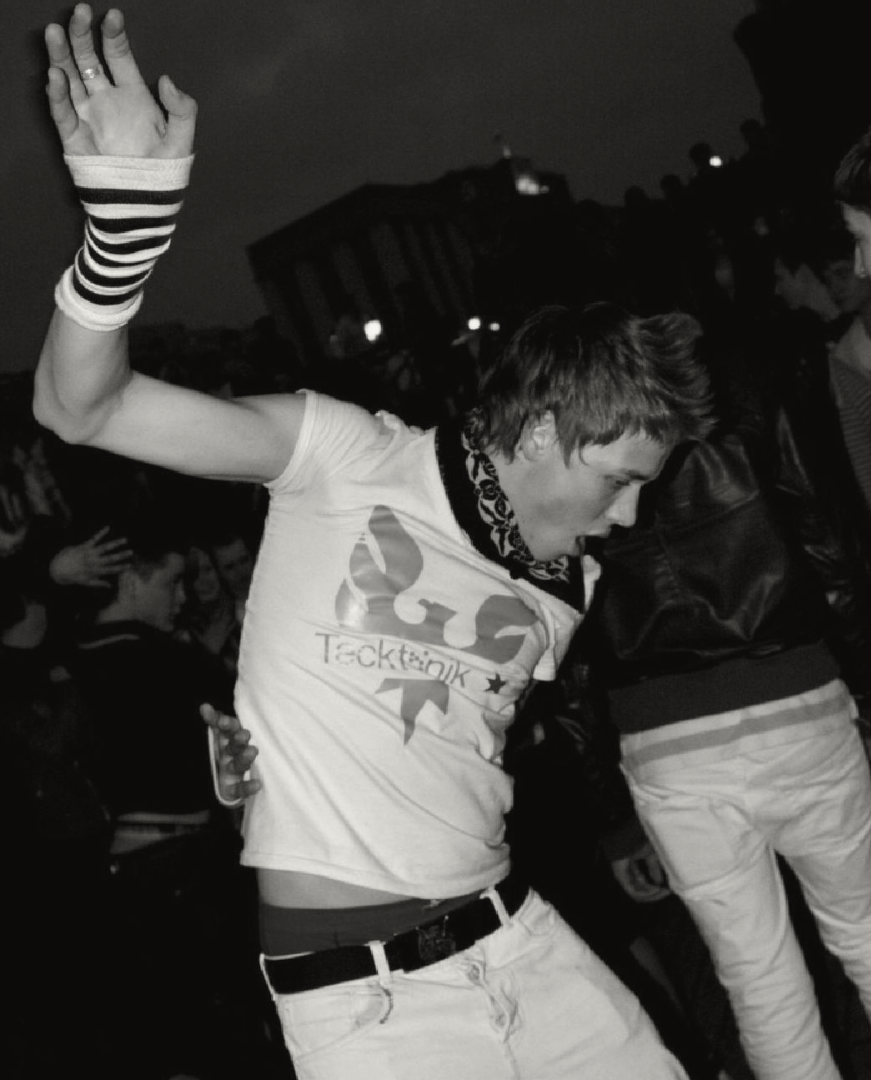
Eighteen years ago, my colleague Tom and I wrote an article for Trendwolves about Tecktonik. It was about a dance that took the youth by storm out of nowhere. Boys with mohawks and skinny jeans, sharp arm movements, filmed in bedrooms and garages, uploaded to YouTube and Dailymotion. Going viral wasn’t a business model back then.
What fascinated us back then wasn’t the dance itself. It was the geography behind it. Tecktonik was given a French label, coined in a club in Rungis. But the music came from our neck of the woods. Jumpstyle and hardstyle, sounds from Belgium and the Netherlands. A French wrapper around a Belgian-Dutch core. The name refers to tectonic plates sliding against each other.
Then the hype faded. And now, eighteen years later, it’s back. Not in the club, but on TikTok. The legendary video of Jey-Jey, a teenager who filmed himself in 2008 in a garage in the Parisian suburbs, is circulating again. One boy, no plan, a million views, a global movement. Just like the Russian brothers, two boys who filmed themselves at home dancing in perfect sync. That video, too, became a cult meme from the early days of YouTube and is making the rounds again today.
Dance naturally does well on social media. But not every dance trend catches on. The moves that stick are the difficult ones. Tecktonik is a prime example of this. You have to practice. You have to be in sync. Those who can do it are proving something. In a feed full of mindless fluff, this stands out.
And there’s more. The creators of those videos from 2007 are in their forties today, with teenage children. You’d think they’d pass it on. But that’s not quite how “cultural transmission” works. Young people rarely find “pop culture” inspiration in their parents. They mainly look to the generation just ahead of them. Gen Alpha doesn’t want to be like their millennial parents but looks to Gen Z, the cool older brother or sister as a role model.
So that’s the driving force. Millennials created Tecktonik. But it’s only making a comeback with Gen Alpha because Gen Z is picking it up, giving it a cool twist, and posting it on TikTok. Parents do play a role, but it’s a different one than you might think. Psychologists once described it as a “cascading reminiscence bump”: children develop a warm connection to the music and culture from their parents’ youth, simply by hearing it. They want to understand their parents’ youth, a world from long before their time. And social media accelerates that. TikTok is constantly breathing new life into old songs. The parents provide the raw material. But it only becomes appealing when the generation above picks it up.
For brands that were already around 20 years ago, there’s a second chance. Look at fashion. Juicy Couture, Von Dutch, Fila: all back, propelled by that same dynamic. Juicy Couture is back on the racks today, with new collections for a generation that wasn’t around back then. Not because their parents are wearing it. Quite the opposite. It works because the generation just above them is making it cool again. The child discovers the brand and finds it authentic, precisely because no algorithm chose it for them.
So here lies an opportunity, and not a cheap one. Because that so-called “reminiscence bump” works through the senses. A song, a scent, a texture that instantly transports you back to when you were fifteen. It’s called the Proust effect, named after the writer whose entire memory came flooding back upon tasting a biscuit dipped in tea. One sensory stimulus, and time comes back. A brand that understands this isn’t selling a product. It’s creating a moment where a parent and a child feel the same thing, each for a different reason. The parent relives their youth. The child discovers theirs. That isn’t nostalgia. That’s building an emotional connection around the universal feeling of being young.
Featured in