
#VeryChinese: What Labubu really predicted
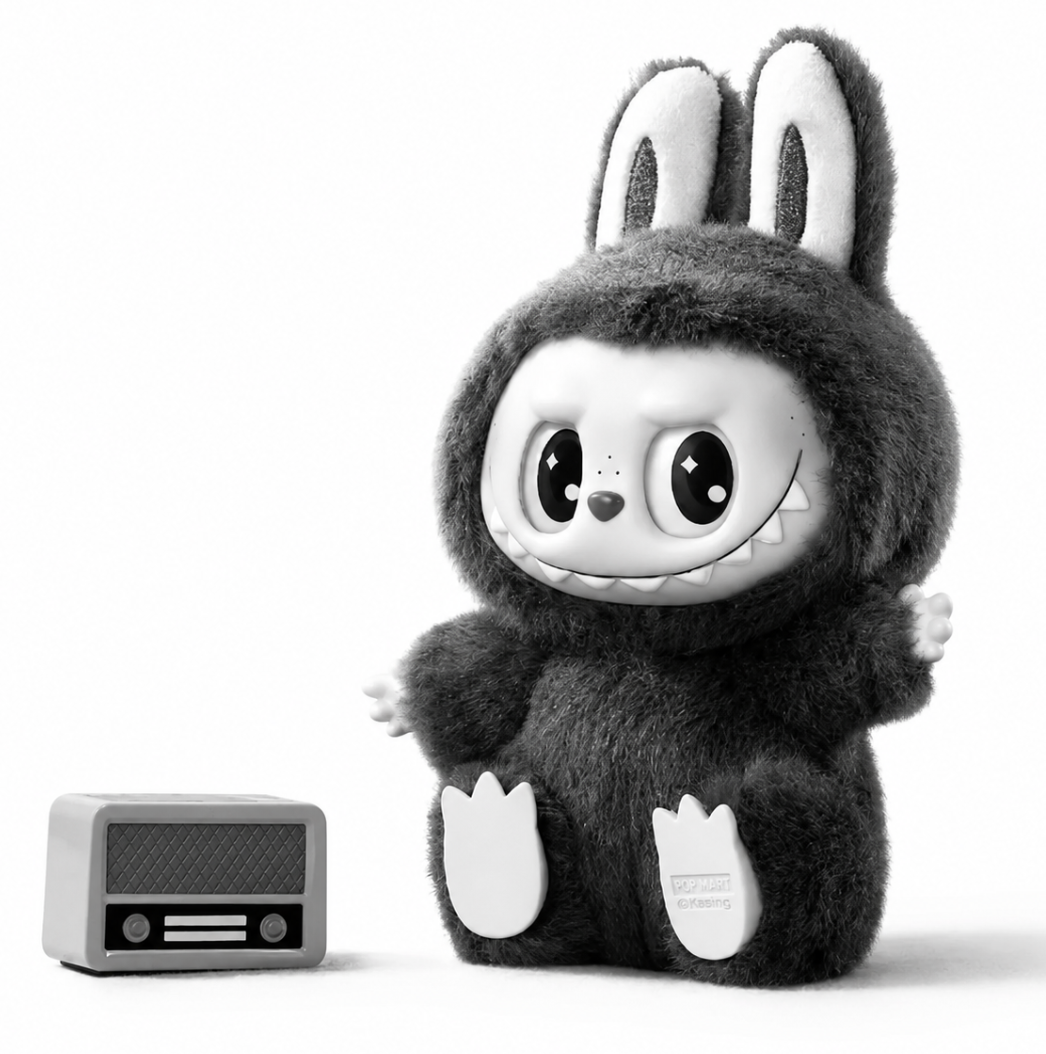
When I wrote in these columns about Labubu and cuteness marketing, I framed the craze around sealed Labubu boxes as a mirror of a generation seeking softness in a world that had become too loud. Quiet culture became the logical next step. Both pieces looked at what Western Gen Z was searching for. What I underestimated is what was happening on the other side of that mirror. Because behind Labubu comes an entire Chinese consumer economy, and it is now placing its foot on Europe's doorstep.
On TikTok, hashtags like #verychinese, #chinamaxxing and 'in my Chinese era' have been surfacing for months. Western Gen Z creators see everything they feel they're missing. A mug of warm water with goji berries, gua sha at sunrise, slippers indoors, a hotpot for two. In between: bullet trains gliding silently into Shenzhen, drones delivering warm noodles for two dollars paid with a flick of the wrist, neon skylines above Shanghai. The caption changes with every video but points in the same direction. They have this, we don't.
Behind Labubu comes an entire Chinese consumer economy, and it is now placing its foot on Europe's doorstep.
For brands, the real lesson lies not in what Western youth are projecting, but in what actual Chinese Gen Z is doing. Those 260 million people are almost the opposite of the quietness being romanticised on TikTok. They spend 5.46 hours a day on mobile internet, shop impulsively between lectures, and want blind boxes, personalised lipsticks and livestream discounts. 80 percent actively buy Guochao, the cultural renaissance where tradition and hyper-modern pop converge. Hanfu on the streets of Hangzhou is not a costume but a limited edition statement. At Shanghai Fashion Week SS26, hundreds of fans wore their favourite Chinese designers head to toe. Not Chanel, not Hermès, but Mark Gong, Oude Waag, Samuel Gui Yang.
And that is precisely why Chinese brands are now coming to Europe themselves. Not as copies, not as budget options, but as architects of a new consumer logic. Pop Mart opened a flagship in Selfridges in 2025 with dedicated Labubu vending machines, eighteen stores across Europe, 600 percent growth in Q1 alone, and a market capitalisation equivalent to Hasbro, Mattel and Sanrio combined. RetailDetail rightly called 2025 in non-food 'the labubusation of retail'. Mixue opened a flagship on Times Square, with Paris and London as the logical next stops. Heytea, Chagee and Molly Tea are rolling out the same playbook with theatrical service and drinks that reference Chinese legends. What Starbucks did with a third place between work and home, they are doing with a third place between coffee and coffeehouse.
Add to that the platforms. RedNote, the international name for Xiaohongshu, announced Redshop this month, their cross-border marketplace. 300 million monthly active users, 83 percent discover products through UGC. Shein and Temu doubled their marketing budgets in France and the UK. TikTok Shop is preparing to launch in Belgium, the Netherlands and Poland. JD.com adds Joybuy to the list.
A Belgian ZEB or Dutch America Today will soon find Chinese fast fashion from brands like Basement FG, Elf Sack and Beerbro served up on Antwerp's Meir or Amsterdam's Kalverstraat via RedNote.
For brands here, this is not an academic exercise. A Belgian ZEB or Dutch America Today trying to protect their Gen Z margins will soon find Chinese fast fashion from brands like Basement FG, Elf Sack and Beerbro served up on Antwerp's Meir or Amsterdam's Kalverstraat via RedNote. An Antwerp accessories brand like Komono is already competing with the algorithmic speed at which Pop Mart expands its IP. Those who only look at China's export side are missing the import.
Those without a presence on Xiaohongshu/RedNote, Bilibili and Douyin are brands without a nervous system.
In mid-September I will be heading to Shenzhen, Shanghai and Hangzhou with retail expert Jorg Snoeck and a Chinese futurist friend, on a trend tour together with a group of top retailers. Not to admire, but to study. Because what Chinese Gen Z is buying today will become a dominant factor for Western Gen Z tomorrow, and for the retail ecosystem that moves around it. Which European players see this in time will help determine who is still in the game in 2030.
Featured in